Deadwood & damage
Identify affected branches, their setting and whether removal or another response is warranted.
AS 4373:2007 · Pruning of amenity trees · Melbourne
The right work begins with understanding the tree.
AS 4373:2007 sets a consistent approach to pruning amenity trees while reducing avoidable harm to their health, structure and appearance. The Suburban Arborist can inspect the tree and prepare a clear scope for a suitably qualified arborist to carry out.
What AS 4373 covers
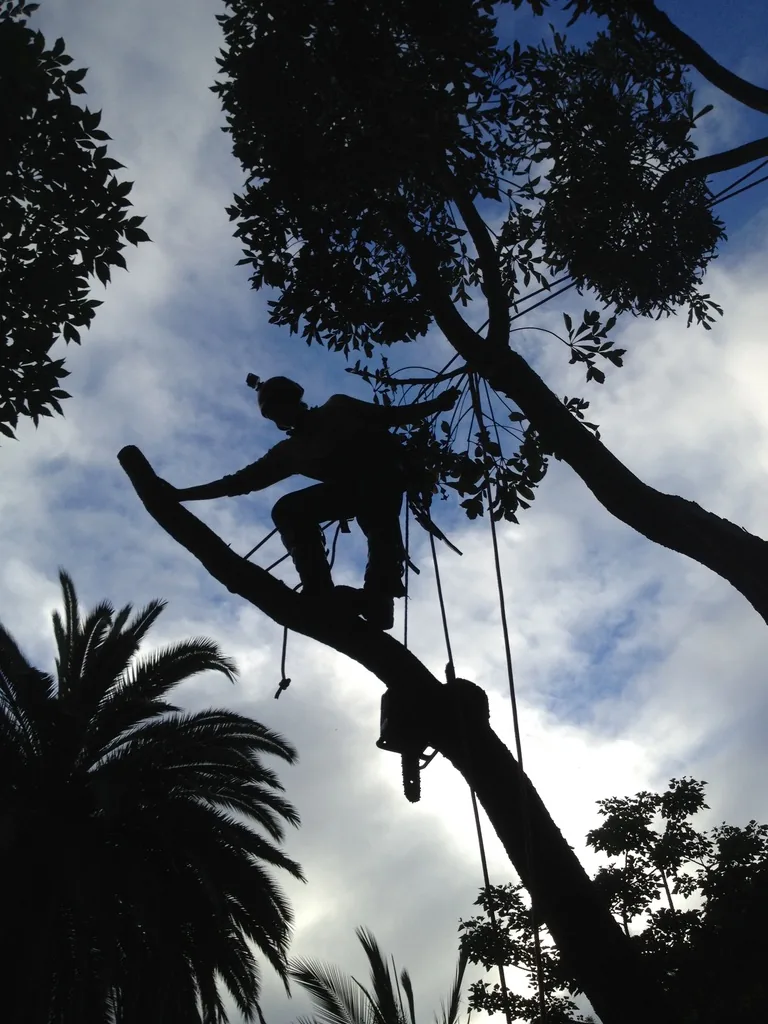
AS 4373:2007 Pruning of amenity trees sets out methods and consistent practices for trees valued for their amenity, including palms. It addresses work such as deadwood removal, crown lifting, formative pruning, reduction for clearance, selective pruning, crown thinning and remedial or restorative pruning.
The standard helps define how pruning should be considered and performed. Each tree still needs its own assessment. A reference to AS 4373 does not replace council permission, safe work planning or consideration of wildlife.
From concern to clear instructions
“Cut it back” can describe very different problems. A tree-specific inspection turns a broad request into an objective that can be understood and checked.
Consider species, condition, structure, previous pruning, growth and the tree’s relationship to buildings, services and neighbouring land.
Define the clearance, branch concern or structural outcome. Less pruning, monitoring or another management action may be the better recommendation.
Identify the tree, the parts to be addressed, the intended result and any limits or site conditions. This gives the contractor a clear brief.
Common pruning objectives
The need for pruning and the extent of work depend on the particular tree, setting and intended outcome.
Identify affected branches, their setting and whether removal or another response is warranted.
Establish the clearance needed for a building, path, vehicle, service or access point without unnecessarily broad reduction.
Address competing or poorly placed growth early so a suitable form can develop over time.
Consider selective pruning, reduction, thinning or restorative work in light of the tree’s condition and history.
Who should do the work
For physical pruning, choose an arborist with at least a Certificate III in Arboriculture, training in AS 4373:2007 Pruning of amenity trees and experience suited to the proposed work. The current Certificate III includes pruning operations as a core unit; its assessment requirements refer to that standard.
That training supports decisions about the objective, cut placement and how to avoid unnecessary damage. Ask who will inspect the tree and who will do the work, and whether their experience, access skills and equipment suit the job. A clear written scope and any required council permission should be in place before work begins.
For a complex tree, a disputed proposal or work tied to a planning approval, independent consulting advice can define the scope before a contractor is engaged.
Discuss your tree
Good pruning has limits
Pruning removes living tissue and can change how a tree grows. The standard identifies lopping, topping and flush cutting as unacceptable practices. Heavy or poorly placed cuts may create future defects and a larger maintenance problem.
The aim is to address the stated concern while retaining as much useful structure and natural form as practicable. Pruning cannot guarantee that a tree will never fail or need further care. Where the main question is health, structural condition or risk, a separate Tree Health and Condition Report or VALID Tree Risk-Benefit Assessment may be the better starting point.
How The Suburban Arborist can help
I provide tree-specific assessment and written advice when the proposed pruning needs a clear professional scope.
Understand the tree, the concern, the site context and whether pruning is likely to meet the intended outcome.
Document the objective, extent and limits of the proposed work for the owner, project team or contractor.
Prepare arboricultural evidence or a proposed scope where permission or a permit condition requires it.
Physical pruning should be carried out by a suitably qualified arborist in accordance with the agreed scope, relevant approvals and safe work requirements. A review of completed work can be discussed as a separate service.
Common questions
That depends on the property, tree and proposed work. Planning controls, local laws, exemptions and permit conditions should be checked before work begins.
The appropriate extent depends on the tree and the objective. A blanket percentage is not a substitute for inspection and a clear specification.
No. Pruning may address a particular branch or clearance issue, while a health, structural or risk concern may need a different assessment and management response.
Yes. Describe the damage and any immediate access concern when you enquire so the appropriate inspection or risk assessment can be scoped. Keep clear of a tree or branch that presents an immediate danger.
I provide independent arboricultural assessment and pruning specifications. A suitably qualified arborist should complete the physical pruning.
About this standard
This page is a practical overview of AS 4373:2007, not a substitute for the full standard or a tree-specific assessment. The complete standard is available through authorised distributors. View the standard listing ↗
Discuss your tree
Tell me what concerns you, where the tree is and what outcome you need. Include photographs, council correspondence or a permit condition if you have them. I can advise whether a pruning specification, permit report, health assessment or risk assessment is the right next step.
[email protected]0401 766 127Consulting across Melbourne & Victoria
Subject to service-area eligibility.
Service area note: Consulting work cannot currently be accepted for properties within Maroondah municipality due to a professional conflict-of-interest requirement.